Meth In Real Estate
Is there room for methamphetamine (ice) in real estate? It has surreptitiously made its way into
the game and amassed a massive following before any real awareness peaked.
In 2008, the Alcopop tax (an excise on RTD’s Ready to Drink) was introduced, making sweet
vodka and other premix spirit beverages much less affordable to the youngsters who had found
a taste for them. At the same time, a loophole in the GST was closed, causing a general price
rise of about 30%. Was this the catalyst for the growth of ice consumption?
There was a decrease in meth use from 2007 to 2009, followed by a significant increase through
to 2013. Australia is the largest user of methamphetamines in the world per head per capita.
75% of all drug labs are residential homes. In QLD, the police closed 330 clandestine labs in 12
months and admitted they may only have acted on what they felt was 10% of the actual number.
So just in QLD that year (2014), there was an expectation of 3,000 active clandestine meth
manufacturing labs operating.
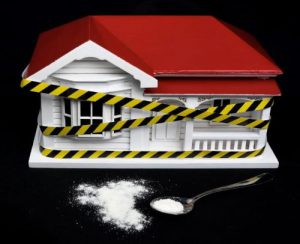 Is there room for methamphetamines in real estate? Many real estate Property Managers just
didn’t want to know me in 2018. It didn’t seem to be an issue, until it was. The awareness of
meth-affected houses is on the rise. The meth-related crimes, also on the rise, appear to be on
the news more often than ever. Will mandatory testing of dwellings solve the problem?
Mandatory testing of dwellings for methamphetamine residue contamination is a very sharp
two-edged sword. If we start testing immediately and remediate the contaminated dwellings,
this will make the houses safer to live in. This action will also create a backlog of many homes to
test and decontaminate. Decontaminations don’t just happen overnight. We are not talking
about a bond clean. Decontamination can take from a day for a very low count to a week, for a
high count, to pulling out kitchens and wall surfaces in a meth lab. God forbid people are
currently very sick living in some of these houses, but it is a reality. A count, or a quantitative
level of methamphetamine residue contamination, is safe below 0.5ug/100cm2. That is 0.5
micrograms of meth residue per template measured at 10 centimeters by 10 centimeters. I am
currently finishing the decontamination of a house people lived in that measured in the
thousands of micrograms.
Here lies the rub. If we plunge into immediate mandatory testing of dwellings for meth residue,
there will be an enormous number of houses immediately deemed unsafe to live in. There is no
measure as to how many homes will be abandoned. The owner can’t afford to remedy the
house, and there is a fair to better chance the insurance won’t cover the clean-up and remedy.
Any previous imagination you may have conjured up of our worst housing shortage ever, will
pale into insignificance.
Are people safer living in contaminated houses or in the street, in their cars, in tents in parks, or
under bridges? This is already taking place, a sight I never thought I would see in Australian
cities. This is what we see on TV happening in third-world countries or the movies. It is surreal.
Now remove 30 % of the houses from the market that are currently occupied. OK, a stretch of
the imagination, I hear you say. It is the accepted number, but only remove 10% of the houses
that are currently occupied. 10% is a conservative number for sure. Ask any experienced
Property Manager what needs to happen when a tenant is found to be living in an unsafe
environment. The backlash from the tenant, the owner, and, in some cases, the authorities will
invoke a Public Health Order.
The steps taken from initial testing to remediation to clearance testing can roll from a single day,
finding no issue to a month of decontaminating and re-testing, then comes the reinstatement. If
you think you will get a kitchen measured, quoted, and installed without a minimum 3 month
wait, pass that cabinetmaker on to me. While this mind-bending and depressing experience is being lived,
there is no rent, so the flowon effect starts to kick in.
The investor may be heavily leveraged and starts to default on the
loan, and good luck selling the house with free meth contamination or a (Public Health Order)
PHO sitting on it for anything half reasonable. I reckon only a handful of Elite agents could
openly pull that off.
As I roam suburbia talking to property managers about what red flags are waved in a meth house
to be looking out for, there is an increasing number of calls from property managers, or those
sending photos or sending work orders to test houses. Let’s face it; if ya don’t know, ya don’t
know. The head-in-the-sand routine just won’t work anymore. For people and Property
Managers it is time to become armed with the right information to protect yourself from physical
harm walking into a dangerous situation, and recognising a serious health concern of children
living in a meth-affected home.
The Answer
There is no magical silver bullet for this ongoing and growing problem, but how can it be best
managed? My suggestion is for Property Managers to test new stock as the house becomes
vacant and before you or your agency houses the next tenant. Why? Well, you really don’t want
to be testing every new house coming on stock while the tenant stands there watching you. That
is a quick trip to ‘painsville’ for your homeowner if the test lights up with a positive indication for
meth residue. There is a real possibility that the tenant will deny all knowledge of any meth
activity, but they will want the homeowner to have them relocated and have all contaminated
furniture replaced. Heads or tails whether a lawyer gets dragged into the equation which will
escalate the cost significantly. So test as the home becomes vacant is a good idea.
The Inevitable
In 2018/19 REIQ put a questionnaire out to their members. One of the questions was in relation
to the mandatory testing for meth residue on exit of lease. This will come into effect as it has in
New Zealand and as is being pushed in West Australia. When, not if, W.A mandates the testing,
Queensland will follow. The authorities may raise the HIL (Health Investigative Level) or safe
level to 1.5 micrograms as NZ did in June 2017 when they released their new Standard. I believe
they raised the levels to make testing and decontamination more manageable, as many houses
were tested over 0.5 micrograms.
There are those who will sit and wait to see mandatory testing happen, and there will be those
who are proactive and start chopping at the upcoming obstacles now and promote meth-clear
rentals – certified. The proactive will then watch the watchers trying to keep their heads above
the encroaching tide when the flood gates open.
Credit Steve Annells – General Manager
Published – Dunrite Decon
July 2026